The Architecture of Consciousness
If reality is filtered by consciousness, how is it shaped? Attention, intention, and imagination are forces that structure experience.
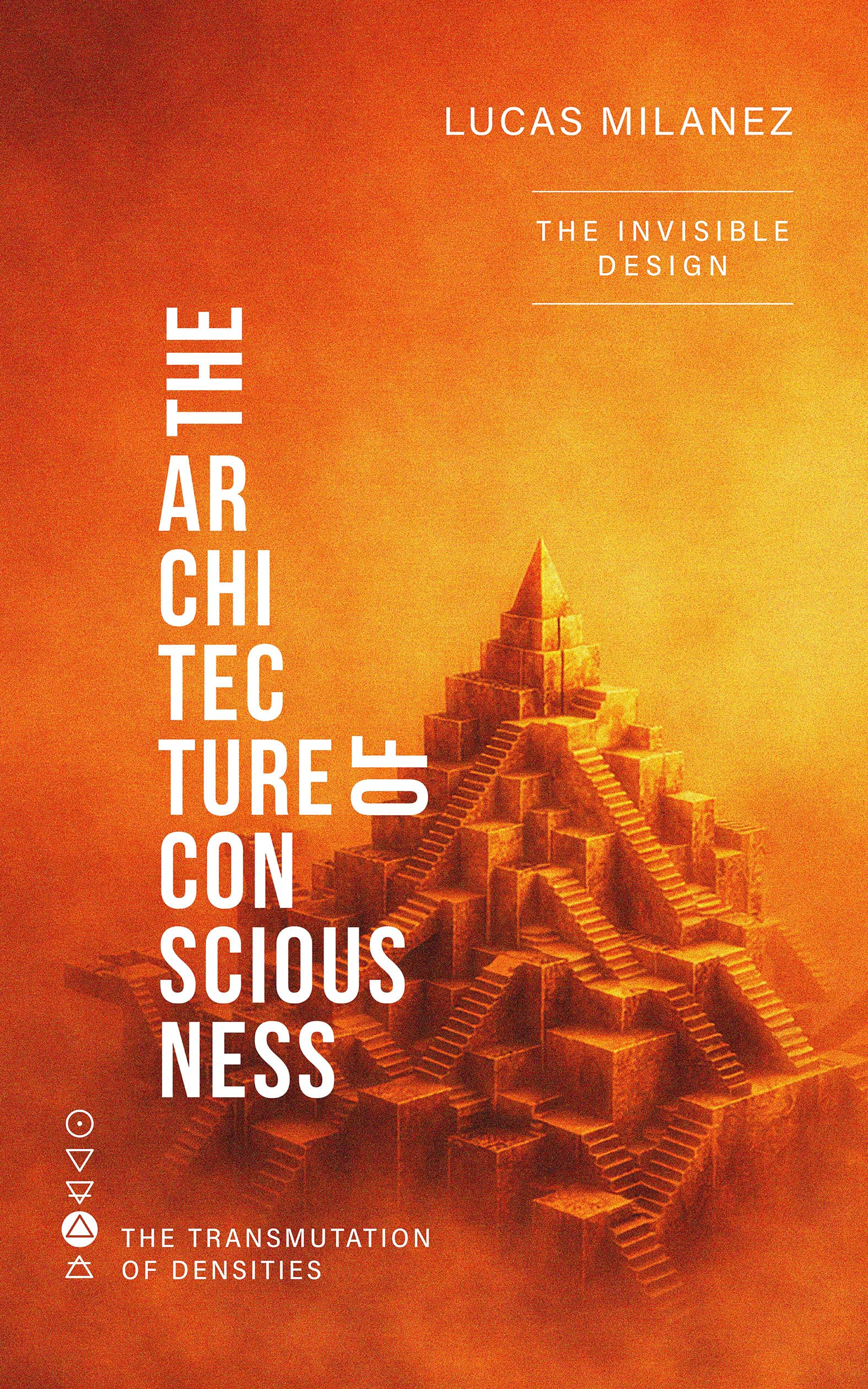
Attention, intention, and imagination are forces that structure experience.
Where Book I made the invisible filter visible, Book II asks what happens next. Having woken inside the matrix, what does consciousness do with that awareness?
This book examines the active principle of consciousness — the capacity to shape the invisible into form. Reality begins to appear not as something fixed but as something continuously created through presence.
Fire does not describe destruction — it describes the directed will that turns raw material into architecture. The reader moves from observer to participant.
Fire symbolizes the active principle — the force that turns awareness into act, and attention into architecture.
In the classical system, Fire governs energy, action, and the will to create. It is the element that does not simply observe — it acts. Where Air sees the structure, Fire reshapes it.
Fire in Book II does not mean urgency or aggression. It means the quiet, sustained heat of directed attention — the capacity to hold a focus long enough that reality begins to reorganize around it. Consciousness, when intentional, is architectural.
The alchemical Sulphur — the active, fiery principle — is the operative force of this volume. Sulphur does not flow like Mercurius; it burns deliberately, purifying through sustained intensity. It is the force behind conscious creation.
Fire symbolizes the active principle — the force that turns awareness into act, and attention into architecture. It is the element of transformation.
The Alchemical Correspondence
Sulphur — the fiery active principle
Burns deliberately; purifies through sustained intensity
Albedo — the Second Operation
Albedo (Whitening) is the alchemical stage of purification — the phase where what has been dissolved in Nigredo is cleansed and made luminous. Having been broken open in Book I, the practitioner now learns to work with the light of intention.
Fire in alchemy is the agent of calcination — it burns away the impure and releases the essential. The Architecture of Consciousness maps how directed will and sustained attention can restructure experience at its root.
Where Nigredo was a confrontation, Albedo is a clarification. The heat has done its work — what remains is luminous and workable.
Free introduction
Enter your email in the window below and we'll send you a link to download the introduction PDF for this volume.
Ready to explore the full arc?
The Architecture of Consciousness is one movement in the series. Five books — each traversing a deeper layer of human experience.